
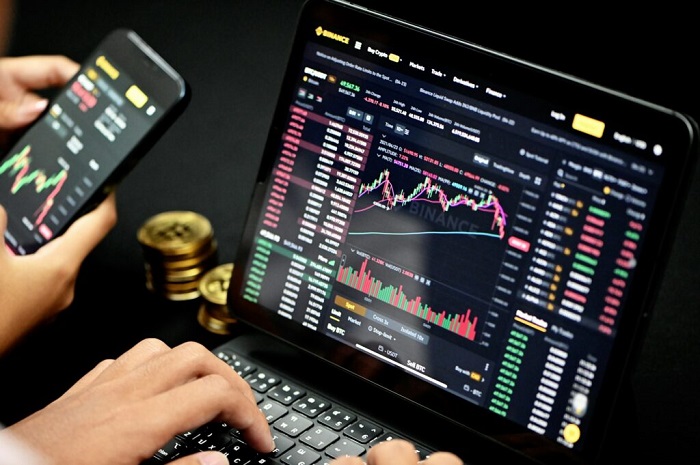

Retail foreign exchange trading is frequently marketed as a realm of effortless mobility, high-leverage windfalls, and frictionless access to the largest financial market in the world. New market participants spend weeks backtesting technical indicators, refining candlestick pattern recognition, and calibrating risk-reward ratios. Yet many overlook the single most critical structural element of their operational setup: the entity holding their money.
In currency trading, market risk is an inescapable reality of navigating macroeconomic shifts. Counterparty risk, however, is entirely within your control. A profitable strategy executed through an unscrupulous or unstable brokerage is functionally useless. Choosing a reliable forex broker is not simply an administrative box to check; it is a defensive capital preservation decision that determines whether your orders are routed fairly, whether your capital is legally protected, and whether you can actually access your profits when you request them.
Prioritize Tier-One Regulatory Frameworks
The global nature of foreign exchange makes regulatory jurisdiction the first and most non-negotiable filter in your search. Because currency trading spans international borders, regulatory oversight varies dramatically from rigorous legal compliance to practically nonexistent offshore registration.
Unregulated or loosely supervised brokers operating out of lightly policed offshore tax havens often promise enticing conditions, such as extreme leverage ratios exceeding 500:1, credit bonuses, or lax account verification. These perks usually mask a total absence of legal recourse. If an offshore broker freezes your account, alters historical price feeds, or simply closes down, recovering your capital through cross-border litigation is nearly impossible.
Instead, confine your capital to brokerages regulated by tier-one financial oversight authorities. In the United States, that means direct registration as a Retail Foreign Exchange Dealer with the Commodity Futures Trading Commission and active membership with the National Futures Association. Across other major jurisdictions, look for licensing from the Financial Conduct Authority in the United Kingdom or the Australian Securities and Investments Commission.
Tier-one regulators impose strict balance-sheet capitalization mandates, require regular third-party audits, and legally obligate firms to maintain segregated client bank accounts. Segregation guarantees that your operating funds are physically isolated from the brokerage’s corporate operational cash, preventing the firm from using client deposits to cover operational liabilities, hedged market positions, or corporate insolvency.
Understand the Real Conflict: Dealing Desk vs. Direct Market Access
Forex brokers do not all handle your trade orders the same way. Understanding the mechanics of how a broker routes your trades is essential for assessing their underlying incentives.
Brokers broadly fall into two execution models: Dealing Desk, often termed market makers, and Non-Dealing Desk, encompassing Straight-Through Processing and Electronic Communication Network architectures.
A Dealing Desk broker effectively takes the opposite side of your trade. When you buy a currency pair, they sell it to you from their internal book. If you lose, the house profits; if you win, the payout comes from their balance sheet. While many well-capitalized market makers operate ethically and provide dependable liquidity, the operational structure contains an inherent conflict of interest. Underhanded dealing desks can exploit this friction through asymmetric slippage, artificial price requotes, or trading platform freezes during critical macroeconomic data releases.
In contrast, an authentic Direct Market Access or Electronic Communication Network broker acts as an unconflicted intermediary. They aggregate executable pricing quotes from top-tier institutional liquidity providers—major global investment banks—and pass your orders directly into that pool. The broker earns revenue by charging a transparent per-trade commission or an explicit markup on the raw spread. Because an agency broker profits from trading volume rather than client losses, their business incentives naturally align with your longevity and success in the market.
Decode the True Cost of Execution
Many retail brokerages market zero-commission trading as a consumer benefit. In institutional finance, however, nothing is truly free. When a broker charges zero commissions, they simply bury their profit margins inside wider bid-ask spreads, unfavorable overnight financing terms, or delayed order fills.
Evaluating trading costs requires calculating the total transaction friction across your specific trading style:
-
Spread Transparency: Compare average spreads during active market overlap hours, such as the London-New York session crossover, against quiet periods. A competitive raw spread on a benchmark pair like the EUR/USD should hover between zero and 0.5 pips on commission-based accounts, or between 1.0 and 1.5 pips on spread-only accounts.
-
Overnight Financing (Swaps): If you hold positions past the daily New York close, brokers credit or debit your balance based on underlying interbank interest rate differentials. Less reputable brokers quietly widen these swap rates, deducting exorbitant debit fees when you hold short-rate positions while providing minimal credit on positive-carry trades.
-
Ancillary Account Fees: Review the firm’s schedule for non-trading expenses. Be watchful for account maintenance costs, inactivity penalties after short periods of dormancy, currency conversion markups on non-base deposits, and outgoing transfer charges.
Test Latency, Order Fill Quality, and Infrastructure
In fast-moving currency markets, a quotation displayed on a screen is meaningless if your order cannot be filled at that exact price. Execution latency—the time it takes for an order to travel from your terminal to the broker’s matching engine—plays a decisive role in trade performance, particularly for intraday scalpers and news traders.
Evaluate the broker’s historical track record with positive and negative slippage. Slippage occurs when an order is executed at a different price than requested due to rapid market movement. In a clean, fair execution environment, positive slippage (getting filled at a better price) should occur with roughly the same frequency as negative slippage. If a broker’s platform consistently fills limit orders with negative slippage during volatility but never passes along positive pricing improvements, the platform is likely manipulating fill parameters behind the scenes.
Additionally, assess the stability and breadth of the software offered. Whether you rely on industry-standard platforms like MetaTrader or cTrader, or custom proprietary web terminals, the infrastructure must feature reliable uptime, advanced charting packages, versatile order types (such as guaranteed stop-loss orders and trailing stops), and stable mobile connectivity for emergency position management.
Execute a Cashier Litmus Test Before Committing Capital
The ultimate test of a brokerage’s financial integrity is how efficiently it processes withdrawals. Shady operations welcome your initial deposit with seamless credit card portals, instant confirmations, and courteous sales follow-ups. The friction typically begins only when a trader requests a capital distribution.
Before funding an account with significant trading capital, complete a controlled trial run. Open an account with a modest amount, execute a few standard market trades to generate clear ledger activity, and immediately initiate a partial withdrawal back to your primary bank account.
Pay close attention to the mechanics of the cashier department. A reliable broker processes withdrawal requests within one to two business days without arbitrary verification hurdles, excessive documentation demands beyond standard anti-money laundering requirements, or evasive customer support responses. If an entity introduces bureaucratic delays or tries to incentivize you to keep your capital on their platform when you ask for your money, close the account immediately and walk away.
Demand Responsive, Professional Human Support
Trading platforms and global financial networks are complex software systems. At some point, you will face an operational emergency: an unexpected platform outage during an interest rate announcement, a margin discrepancy, or a delayed wire transfer.
In those moments, navigating an unhelpful automated chatbot or waiting forty-eight hours for an email response is unacceptable. A dependable forex broker provides accessible, round-the-clock dealing desk support via direct telephone lines and responsive live chat during all active market trading hours. Test their support desk before you deposit money. Ask technical questions about their margin liquidation policies, order execution routing, and account tier structures. The depth, speed, and transparency of their answers will tell you everything you need to know about how they will treat you when real capital is on the line.
Sustainable trading success is built on a foundation of deliberate risk mitigation. By prioritizing robust tier-one regulation, demanding transparent execution, confirming reasonable carrying costs, and rigorously testing the withdrawal process, you insulate your capital from unnecessary counterparty hazards. Treat the selection of your forex broker with the same discipline, skepticism, and rigor that you bring to your trading strategies, and you will ensure that your operational setup supports your long-term market longevity.

Comments are closed.